You have probably seen these sports at least once, if not on the television then most likely on your phone scrolling through Instagram or viewing stories. The athletes look so poised and graceful while performing hard skills, some seeming almost impossible, yet they still look so elegant. Sports such as cheerleading are both dangerous and high-risk despite what many would think. Athletes perform with such high energy and enthusiasm that leaves viewers thinking nothing could be wrong off the mat.
Many would disagree, whether its ex athletes of the sport or people sharing their opinion of the athlete’s appearance. It’s undeniable that when the term cheerleader is mentioned, a certain image pops up in peoples head. The image that comes to mind will be someone who is tall, skinny, blonde and nasty. What has led to this stereotype is the portrayal of cheerleaders in movies and TV shows. Another viable question is whether literature is to blame for the way these characters are viewed by the public. The truth behind this stereotype is that cheerleaders whether they are competitive or recreational don’t fit this look, as with every sport people come in different heights, weights and sizes.
The world of All-star and competitive cheer is a harsh one. With competitive cheerleaders getting judged on everything from how their hair and makeup is done to how well they look in their uniforms and this is all before the routine has begun. All these issues are running through their heads as they perform an exciting, enthusiastic and highly skilled routine. Speaking from experience cheerleaders are constantly comparing themselves to their teammates both on their physical appearance and their skill level. On many competitive teams the athlete’s spot is never secure, they must constantly prove themselves and this competition makes these comparisons inevitable. These constant comparisons between team members often leads to athletes potentially feeling poorly of themselves. Thus, athletes begin to criticise everything about themselves, questioning are they good enough to be on the team.
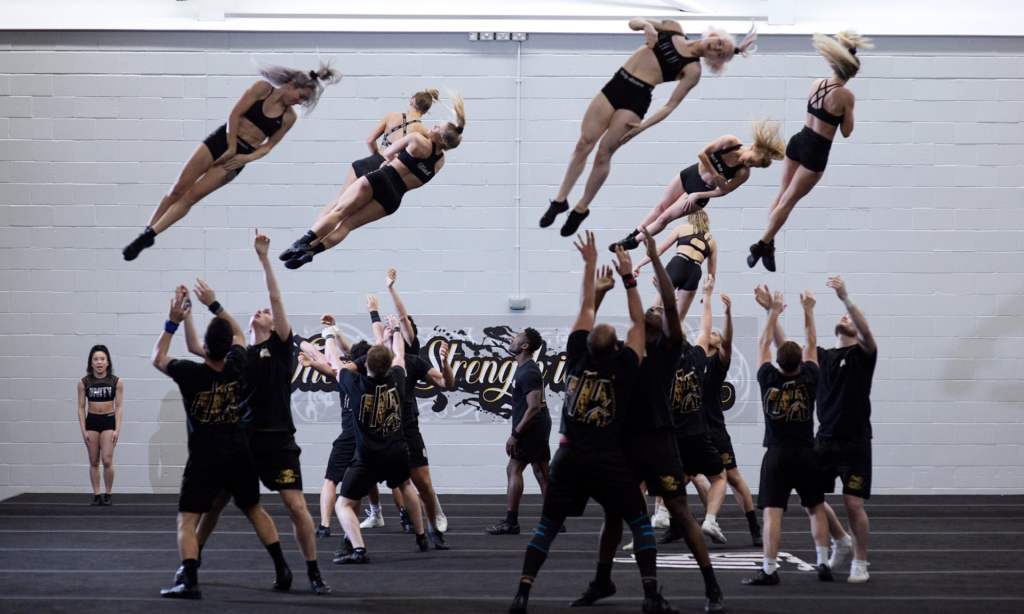
So how does this sport impact the metal health of these athletes? Cheerleaders are at a high risk of developing body image issues or eating disorders according to a study done by Toni Torres-McGehee. This study focuses primarily on college level cheerleaders in America and it found that many of these athletes are affected by these issues and many of them held characteristics of eating disorders. So why do these athletes feel this way? It could be down to the revealing uniforms that often show off the midriff section and as a consequence forces them to look perfect. Or is it that the ‘perfect body’ definitely plays a role in how these athletes view themselves in comparison to others while constantly battling the opinion of onlookers. In Netflix’s new documentary “Cheer”, we see a competitive college athlete weigh herself and being unhappy with the number displayed on the scales, despite her physical appearance being a small frame with little body fat. The ‘perfect body’ standard that seems to exist within the competitive cheer world has to have a negative impact on athlete’s mental health. In an effort to combat this, some competitions have rules where cheer clubs with athletes under a certain age are only allowed to have full length tops as part of their uniform.
However, not only does this sport encourage possible body image issues, it is a very dangerous sport which has numerous injuries some of which are catastrophic. While the most common injury gained in this sport is a sprain and the overall injury rate tends to be quite low, the severity of these injuries is what makes this sport dangerous for its athletes. Due to the nature of this sport, athletes are thrown in the air and either flipping or twisting whilst airborne. This means there is a strong possibility that athletes could fall from a height which would severely injure them. It can’t be denied that taking part in this sport whether at a professional or amateur level leads to its own set of issues and problems. This sport like many other holds a lot behind the persona that the team and the athletes present to the public. This sport holds the potential to be both physically and mentally dangerous to the athletes who compete it.
 Beyond Sport